Ostomy
Ostomy is a type of digestive system surgery, a
patient needs it to remove a chronic disease, infection, injury, and blockage
from the large intestine, small intestine, and bladder (colon, ileum, rectum).
It would be a new term for many people; thus, it can distress you. But, it is
not something that will retrograde the quality of life. Because of this
operation, you will get rid of the disease and able to enhance your life. No
wonder, it will demand a few adjustments and emotional changes, but these will
not last forever. Even the permanent ostomates feel a new life once they know
how to deal with the stoma and ostomy life. This makes your life disease-free
and easy than before.
Types of Ostomy
Ostomy has three primary types to treat your
disease. Every kind is related to a specif tract in your digestive system.
These are:
1. Colostomy
2. Ileostomy
3. Urostomy
Colostomy
A colostomy is a kind of ostomy surgery used to treat and cure the large intestine in a digestive system. It involves the rectum and colon. When a person is diagnosed with a harsh disorder or cancer in these canals, he/she has to go through the colostomy surgery.

In this procedure, a surgeon removes the infected
or dysfunctioned part of the large intestine or bowel, leaves the functioning section
of the large intestine, brings it to the outer abdominal wall.
The reasons that drive patients towards the colostomy surgery are colon cancer, rectum cancer, bowel disease, injury in the colon, a blockage in the anus, a blockage in the rectum, birth defect in the colon or rectum, blockage in colon, diverticulitis, or any other chronic disease in any section of the large intestine. This makes the stool come out possible through an inorganic pathway.
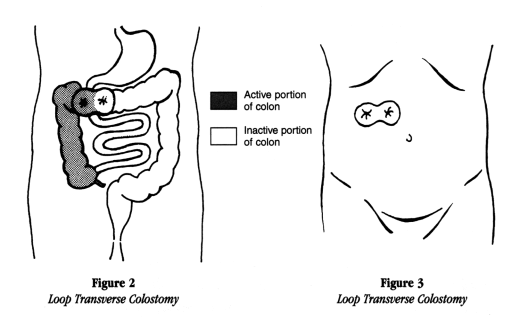
Surgeons build an artificial round organ in the
abdomen of the patient. This part is a circular pit in the lower left side of
the navel, called a stoma. It accumulates the solid stool from the stoma.
Remember that the colostomy opening only discharges the solid waste of the
human body. If it releases a semi-solid stool, it is having a problem in stoma
or an internal organ.
Ileostomy
It is a kind of ostomy that can cure the diseases
and disorders in the small intestine. It involves the ileum, duodenum, and
jejunum. When a person has dysfunctioned ileum, it makes the digestive system
and the entire life of a patient disturb; thus, the person has to go through
the ileostomy surgery.
The ileostomy becomes necessary in case of
blockage in the ileum, injury in the ileum, cancer in the ileum, inflammatory
bowel disease, holes in the ileum. or colitis disease.
The procedure involves the removal of the
infected bowel or small intestine. A nurse designs a round hole on the lower
right side of the patient's abdomen, then doctors remove the disease from the
ileum or bowel. In a few cases, a doctor removes the entire intestine. Well,
the doctor will bring the remaining and functioning section to the stoma. It
will discharge a semi-solid form of feces. The stoma will be dark pink or red.
Urostomy

Urostomy is a kind of ostomy surgery that happens
to remove the infected part of the bladder or the entire organ. It also
eliminates the disease from the urinary tract. Thus, doctors need a new passage
for the urine to come out. They fabricate a stoma on the right side of the abdomen.
After this operation, the tubes of the kidneys directly pass the urine to the
stoma opening.
The urostomy surgery becomes compulsory when a
patient has bladder cancer, infection in the bladder, injury in the bladder,
birth defect, or blockage in the tubes of urinary tack.


